Your weekly note from Willson Center Director Nicholas Allen
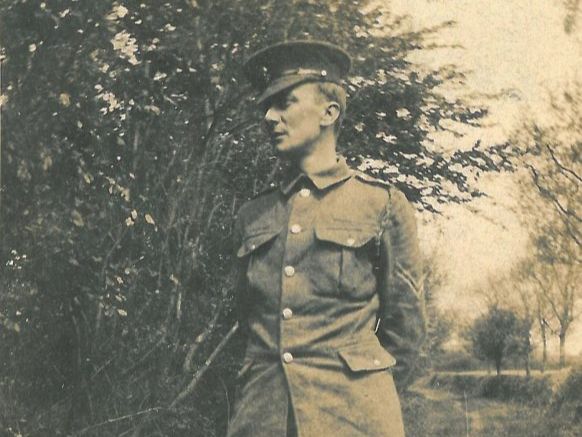
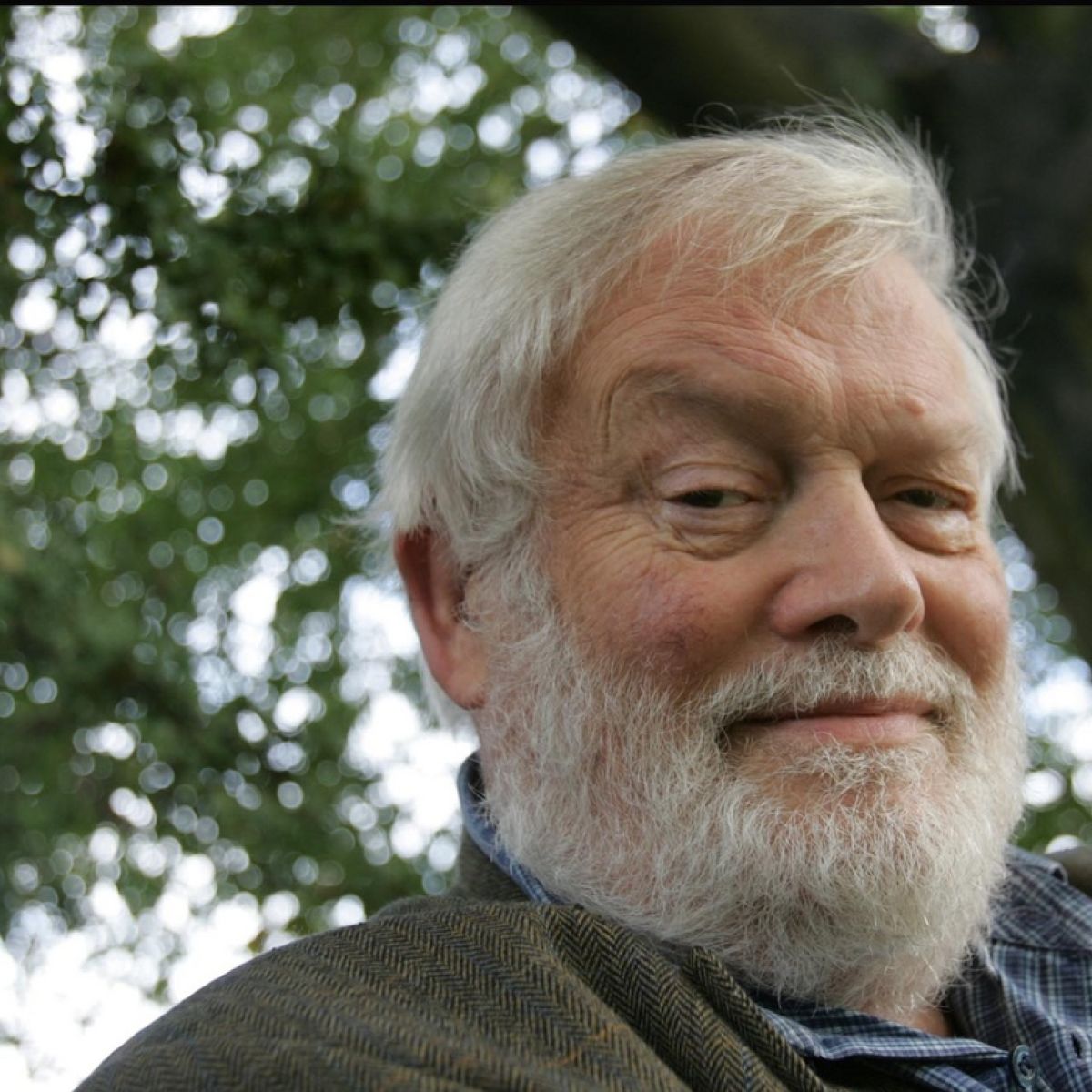
Tim Robinson, a walker in all weathers
A poem selected by our director Nicholas Allen, Baldwin Professor in Humanities
Dear friends,
Years ago we used to go to the Greek islands in the May time. From that other Athens we broke for Piraeus and the ferry to Naxos, from where we sailed to Koufonisia, Schoinousa, Folegandros. I remember a sunny day on the ferry deck with a Swiss lady who shrieked with delight at her first sight of a dolphin clear out of the water, and the ramble of a farmer on his donkey down the stone steps of Amorgos, perched before the evening’s hay harvest, peppered with red poppies. Now I grow rosemary and basil in my front garden for the people who walk by, an Aegean transport, the herbs a perfume the island youth wear on their own evening promenades.
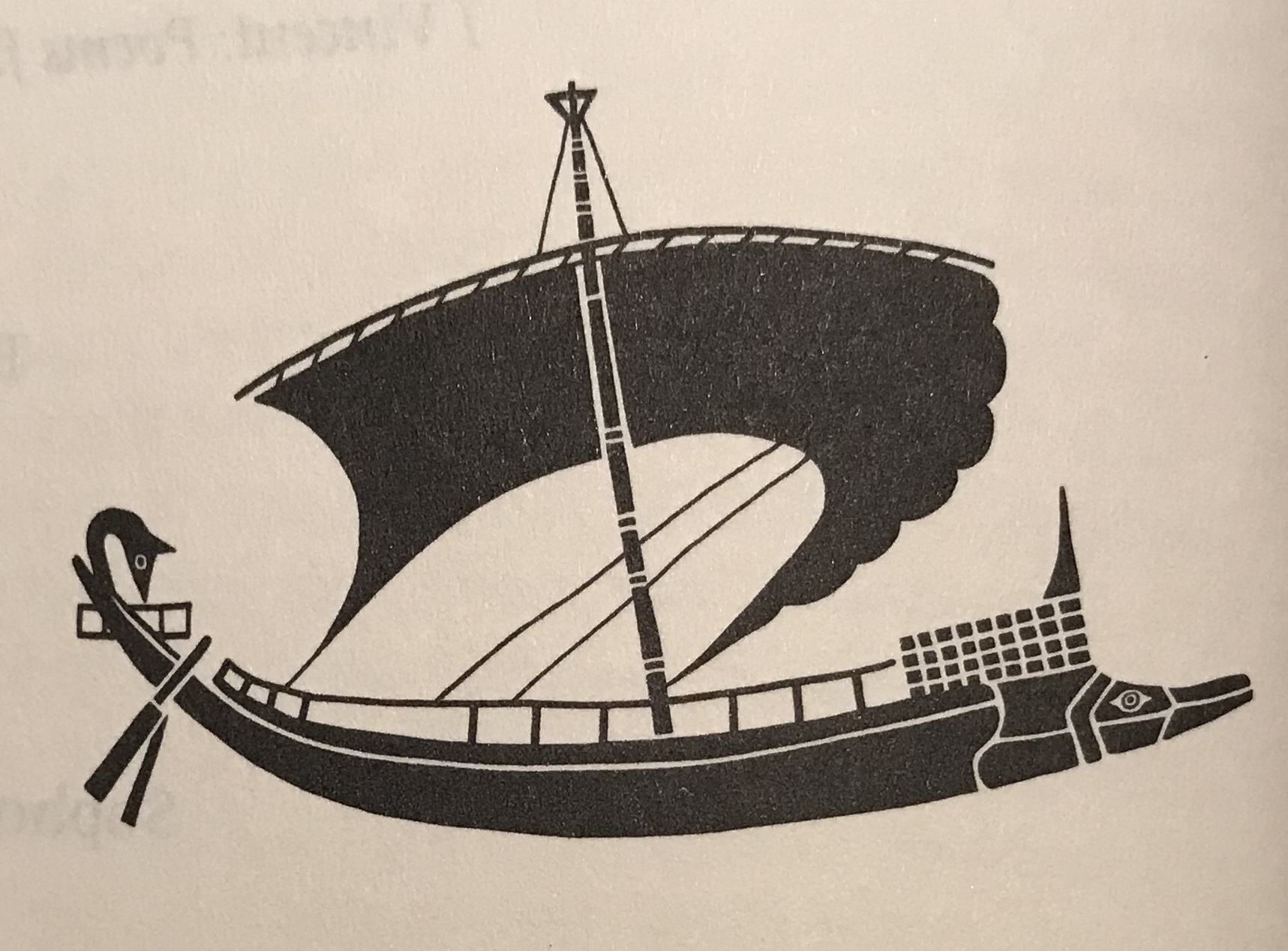
For all that I found myself becalmed this wet and grey Sunday. As I daydreamed about other places I remembered the Kolymbetra Gardens in the Valley of the Temples at Agrigento in Sicily. This Mediterranean outpost bears the influence of many cultures, of Carthage, Akragas and Syracuse, and Arab and Christian later. Watered by tanks and channels that are millennia old, the garden, shaded with the leaves of olives, lemons and limes, is an echo of the garden that great Greek sea-farer Odysseus finds when he comes upon Calypso. Odysseus, that man of tactics, fox sly and hardy, is a hero for his unrelenting intelligence. As I turned to Robert Fagles’s translation, which was the first that ever made these old words sing to me, I thought of the determination we need, like Odysseus, Penelope and Telemachus, to make the long journey through. The Odyssey is the work of other worlds than ours. But its qualities of ingenuity and refuge remain, nurtured as they are in the first entrance to Calypso’s garden, verdant and lush.
As always,
Nicholas
‘… A great fire
blazed on the hearth and the smell of cedar
cleanly split and sweetwood burning bright
wafted a cloud of fragrance down the island.
Deep inside she sang, the goddess Calypso, lifting
her breathtaking voice as she glided back and forth
before her loom, her golden shuttle weaving.
Thick, luxuriant woods grew round the cave,
alders and black poplars, pungent cyprus too,
and there birds roosted, folding their long wings,
owls and hawks and the spread-beaked ravens of the sea,
black skimmers who make their living off the waves.
And round the mouth of the cavern trailed a vine
laden with clusters, bursting with ripe grapes.
Four springs in a row, bubbling clear and cold,
running side-by-side, took channels left and right.
Soft meadows spreading round were starred with violets
lush with beds of parsley. Why, even a deathless god
who came upon that place would gaze in wonder,
heart entranced with pleasure…’
Homer, The Odyssey, trans. Robert Fagles
A poem selected by our director Nicholas Allen, Baldwin Professor in Humanities
Dear friends,
I think of the sea all the time, as I know you too think of places beyond our horizon, still there and in the mind for now. We will return to these places soon, but changed. Poetry can be a preparation for the journey we are taking even now, words a bridge for us to cross the depths. Literature invites us to look up and out as we read, the mind opening to other places and times, the strange familiar, the familiar strange.
The sea I think of is the north channel between Scotland and Ireland, which is only around fifteen miles at its narrowest. It is an old province of story and myth, of Vikings, Gaels and the cross-water kingdom of Dalriada. The way-markers of this channel range from the Giant’s Causeway to Ailsa Craig, that haunt of mad Sweeney, the king cursed by a saint and turned to a bird, its inshore waters the haunt of seabirds and selkies, half-fish, half-human, in siren song.
Kathleen Jamie is a poet from this wind-blown territory in the west of Scotland. “Before the Wind” begins as a poem of observation and ends as something else. A nature poem, yes, it is also a vision, inviting and unsettling. It has always fascinated me how a short string of sentences like this can braid a world together. Jamie does it masterfully, writing the reader into a sequence of stone, branch and flower that is possessed of its own organic logic.
I hope this visit finds you in good cheer. I think of you all during these uncertain days, in which we can at least be sure of poetry as a portal to freedoms that are open to every reader.
Be well,
Nicholas
“Before the Wind”
Kathleen Jamie
If I’m to happen upon the hill
where cherries grow wild
it better be soon, or the yellow-
eyed birds will come squabbling
claiming the fruit for their own.
Wild means stones barely
clothed in flesh, but that’s rich
coming from me. A mouth
contains a cherry, a cherry
a stone, a stone
the flowering branch
I must find before the wind
scatters all trace of its blossom,
and the fruit comes, and the yellow-eyed birds.
A poem selected by our director Nicholas Allen, Baldwin Professor in Humanities
Dear friends,
I have been thinking this past week about literature in all our times of crisis, which reminded me, in usual roundabout fashion, of the time I slept with Samuel Pepys’s chair (we happened to share a room in Magdalene College in Cambridge, but more about that another time). Pepys is best remembered now for his diaries, some of which record his experience of London during a plague, and after that the great fire. If words cannot give back what life takes, they can make what lasts beyond, which is, to me, one proof of our constant, shared concern.
As I wondered then which poem to share with you this week in face of all that stands before us I thought of Eiléan Ní Chuilleanáin’s “The Nave,” which is collected in The Sun-Fish. Like many of you who keep Cortona close to heart, Eiléan has a deep love for the Italian countryside, where she has summered for many years. She is also steeped in the languages and cultures of early modern Europe, not least of which is Irish. You can hear a sample of her reading here.
“The Nave” is her account of a solitary journey through an Italian hill-town celebrating a religious procession in the summer heat. Moving through the crowds to quietude in a cool church, she has a vision of poetry that is of the light, the air, and the sea, the nave, after all, being in the Christian tradition built in the structure of a boat. I love this poem for its lift, which is hard-won and quietly joyous, for its vision, which elevates a single moment into something more and deeper, and for its solidarity, with the sick as with the celebrant.
This is one to think about for a week and more. In that time, as always, I send greetings of peace and friendship,
Nicholas
“The Nave”
by Eiléan Ní Chuilleanáin
Learning at last to see, I must begin drawing;
I cast abroad the line
That noses under stones, presses around an instep,
Threads off into distance and forward again
As it pierces and drags. Like a daft graph it shoots
Up, like a weed falls and rises. I am led, I find it
Looped on every crooked corbel. Drowned in deep shadows
I catch myself in a tangle of rickety laneways,
Part of a procession. The streets
are full of innocence, a stumbling,
Cobbled bazaar of shining bargain treasures,
Their shimmer resisting the eye,
Remotely the four-four beat of the carnival march
Pulls me aside, adrift on the stepped descent –
A fresh smell from the lemonade stall announces
The square transformed. The trinkets dangle,
Ribbons wrap round and round the colored poles,
The air darkens, fairy lights burst out on wires;
The line calls me upwards, curving banisters,
Their metal studs too nearly worn away,
Come to a point where a little troop,
All brightly masked, waits for more companions
Before the steeper climb.
It is cooler here:
Darkish stone, slate, a marble well, a ramp
With a squashed feather stuck to one side, then old,
Clean tiles. I am drawn, staggering –
It feels like lifting a tall, swaying ship
With wind-filled streamers –
Across the threshold.
And indeed the nave
Hums like a ship, the corded masts and spars
Are tugged by wind, and the uppermost gallery
Swings and revolves. The hanging censer
Vibrates like a spider in his thread. In the rigging clings
A saint whose cure is personal as a song
Performed aloud at a wake by a special call,
Or softly to a patient in her hospital ward.
A poem selected by our director Nicholas Allen, Baldwin Professor in Humanities
The Alliance for the Arts in Research Universities (a2ru) national conference theme for 2020 is “Land and Equity: The Art and Politics of Place.” The annual conference will be hosted by the University of Wisconsin–Madison October 15-17.
Proposals are now being accepted for presentations, workshops, and performances.
The Athens Music Project began as a Willson Center faculty research cluster headed by Jean Kidula and Susan Thomas, both at that time professors of musicology in the Hugh Hodgson School of Music. It has grown to include a vast and expanding repository of oral histories housed in UGA’s Special Collections Libraries under the watchful eye of librarian and archivist Christian Lopez. Michael Terrazzas of @UGAResearch has written a deep dive into the AMP’s origins, current endeavors, and plans for the future.
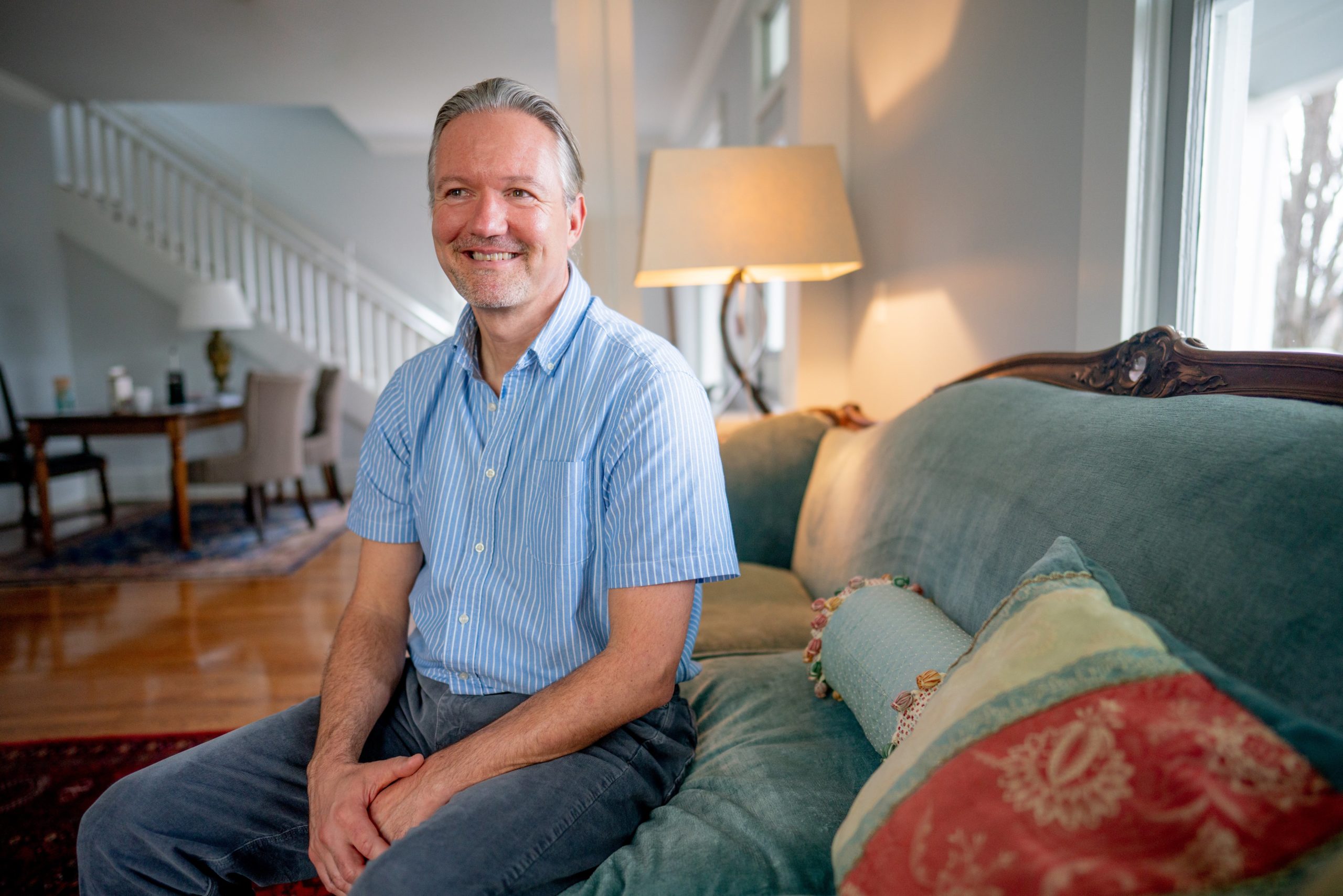
The online magazine @UGAResearch has published an interview with Willson Center director Nicholas Allen about the role of the humanities in higher education and in a happy and successful life.
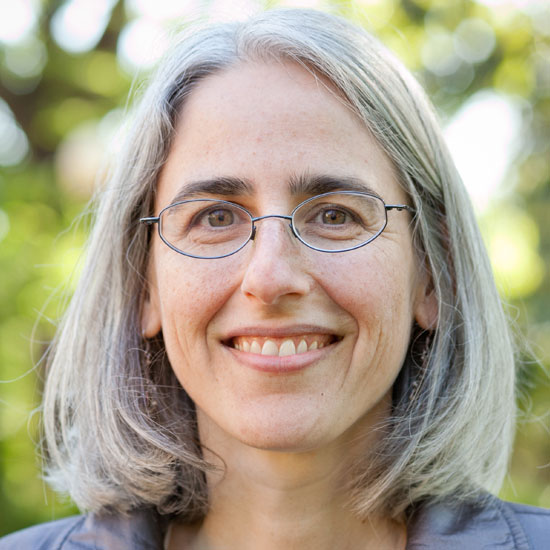
Rachel Gabara, associate professor of Romance languages in UGA’s Franklin College of Arts and Sciences, has been awarded a research fellowship by the National Endowment for the Humanities for her book project, “Reclaiming Realism: From Documentary Film in Africa to African Documentary Film.”
Prof. Gabara is a past member of the Willson Center Faculty Advisory Board and recipient of a Willson Center Research Fellowship, as well as a frequent partner and participant in numerous Willson-supported programs. She had this to say about her work with us:
The Willson Center for Humanities and Arts has been a vital resource for me throughout my career at UGA, providing support to bring important scholars and filmmakers to campus as well as to strengthen my own research and writing. This previous support, along with encouragement to compete for prestigious national grants, was invaluable as I prepared my application for the NEH Fellowship. The seminar that the Willson Center organized in February 2018 with Daniel Sack, Senior Program Officer at the NEH, was particularly helpful. Along with the support of my recommenders and colleagues, persistence was key, since it was my second attempt that was successful!
A couple of specific examples of how recent Willson support has played out for me: Willson administers the selection process for UGA’s two nominations for the NEH Summer Stipend program. I was selected for nomination and received the award for Summer 2018 – comments from the Willson committee were very helpful as I revised my proposal for the national competition. And a Willson-administered Faculty Research Grant in Fall 2018 allowed me to complete a chapter of the book manuscript for which I got the NEH Fellowship. I presented the chapter at the Institute of African Studies Seminar at Emory University at the end of that semester, then turned part of it into an article entitled “Complex Realism: Paulin Vieyra and the Emergence of West African Documentary Film,” which is forthcoming this spring in the journal Black Camera.
Congratulations to Prof. Gabara for her well-earned success, and we look forward to her continuing association with the Willson Center.
Faculty who are interested in being nominated for the Whiting Public Engagement Fellowship or Seed Grant may submit proposals to the Willson Center by March 26. Faculty are encouraged to review previously funded fellowships and seed grants on the Whiting website and to submit drafts to the Willson Center by March 5th for feedback in advance of the deadline.
The Whiting Public Engagement Fellowship and Seed Grant programs are intended to celebrate and empower early-career faculty who embrace public engagement as part of the scholarly vocation. Both programs support ambitious projects infusing into public life the richness, profundity, and nuance that give the humanities their lasting value. The stage of a project will determine the relevant program.
The Public Engagement Fellowship ($50,000) is for projects far enough into development or execution to present specific, compelling evidence that they will successfully engage the intended public. For the strongest Fellowship proposals, both the overall strategy and the practical plan to implement the project will be deeply developed, relationships with key collaborators will be in place, and connections with the intended public will have been cultivated.
The Public Engagement Seed Grant (up to $10,000) supports projects at a somewhat earlier stage of development than the Fellowship, before the nominee has been able to establish a specific track record of success for the proposed public-facing work. It is not, however, designed for projects starting entirely from scratch: nominees should have fleshed out a compelling vision, including a clear sense of whose collaboration will be required and the ultimate scope and outcomes.
Nomination and Guidelines: Partner schools are invited to nominate one humanities faculty for each of the two programs. See the guidelines for further details about both programs and eligibility.
Eligibility: To be eligible for either program, nominees must be full-time humanities faculty at an accredited US institution of higher learning as of September 2020; they must be early-career, defined as pre-tenure, untenured, or have received tenure in the last five years. Full-time adjunct faculty at an equivalent career stage are eligible.
Submission and deadline: Interested faculty who meet the conditions above should submit a proposal (1-2 pages) that briefly addresses:
Faculty should submit their proposal and CV to Dr. Lloyd Winstead, Senior Associate Director at the Willson Center, at winstead@uga.edu by March 26. Please submit drafts by March 5. Faculty will be notified regarding selection in April.
In partnership with Georgia Humanities, the Willson Center for Humanities and Arts hosted the second Georgia Humanities Symposium, a national conversation on the public humanities, in the Columbus Museum in Columbus, Ga. on Friday, February 7, 2020.
The program was supported by a grant from The Andrew W. Mellon Foundation and included speakers from a diverse range of institutions and foundations, including the National Humanities Alliance, the Consortium of Humanities Centers and Institutes, a2ru, the Do Good Fund, the Rural Studio, These Halls Can Talk, and several Georgia and Southeastern institutions.
The conversation was free and open to the public, and travel support was made available to participants.
The Georgia Humanities Symposium has two aims:
This was the second of three annual meetings during which participants shared experiences of projects, grants, and innovations in humanities research and teaching.
The Georgia Humanities Symposium is made possible by the generosity of The Andrew W. Mellon Foundation through a grant to the Global Georgia Initiative of the Willson Center for Humanities and Arts at the University of Georgia.
https://humanitiesforall.org/#state=ga
https://www.humanitiesindicators.org
https://www.georgiahumanities.org
https://columbusmuseum.com/welcome.html
https://www.columbusstate.edu/
9:30-10 a.m.
Check in
10-10:15 a.m.
Welcome
Ronald C. Williams, Associate Provost for Faculty Affairs and Academic Innovation, Columbus State University
10:15-11:30 a.m.
Panel One
Chair: Stephen Kidd (National Humanities Alliance)
Deneen Senasi (Mercer University)
Ben Reiss (Emory University)
Chara Bohan (Georgia State University)
Shaleisa Brewer (These Halls Can Talk)
Chester Fontenot (Mercer University)
11:30-11:45 a.m.
Coffee
11:45 a.m.-12:30 p.m.
Conversation with the Rural Studio and The Do Good Fund
Nicholas Allen, Rusty Smith, Hannah Israel
12:30-2 p.m.
Networking lunch
Conversations hosted by CHCI, a2ru and others
2-3 p.m.
Panel Two
Chair: Amanda Rees (Columbus State University)
Ann McCleary (University of West Georgia)
Lauren Bradshaw (University of North Georgia)
John Tures (LaGrange College)
Mark Wilson (Auburn University)
3-3:15 p.m.
Closing remarks
Nicholas Allen (University of Georgia)
The Willson Center has announced its Global Georgia Initiative public event series for Spring 2020, which begins with a conversation on culture and community between the Creature Comforts and Allagash brewing companies on January 8. The series also includes two Pulitzer Prize winners, the second DJ Summit in the Global South, the Betty Jean Craige Annual Lecture, two giants of contemporary Irish music, and the author of a new book on the emergence of the Athens music scene alongside the UGA of the 1980s.
The series schedule is as follows:
GLOBAL GEORGIA INITIATIVE PUBLIC EVENT SERIES
SPRING 2020
Jan. 8 Tapping into Community: Craft, Culture, and Innovation
A Conversation with Creature Comforts and Allagash Brewing Companies
Rob Tod, founder, Jason Perkins, brewmaster, Allagash Brewing Co.
Chris Herron, CEO, Adam Beauchamp, brewmaster, Matt Stevens, vice president of strategic impact, Creature Comforts Brewing Co.
Grace Bagwell Adams, assistant professor of health policy and management, UGA and principal investigator, Athens Wellbeing Project
4 p.m. | Studio 225
Public reception
6 p.m. | Creature Comforts Tasting Room
Presented in partnership with Creature Comforts Brewing Co. and the UGA Office of Sustainability
Feb. 13 Val Jeanty
Composer, percussionist, DJ
Conversation with Ashon Crawley
Associate professor of religious studies and African American and African studies, University of Virginia
6 p.m. | Ciné
Performance
7 p.m. | Ciné
Part of DJ Summits in the Global South, a Global Georgia Initiative Research Project supported by The Andrew W. Mellon Foundation. Presented in partnership with the Institute for African American Studies and the Latin American and Caribbean Studies Institute.
Feb. 27 Lawrence Wright
Pulitzer Prize-winning author, journalist, screenwriter, playwright
Ferdinand Phinizy Lecture
“The Future of Terrorism”
4 p.m. | UGA Chapel
Presented by the department of history and in partnership with the School for Public and International Affairs and the Center for International Trade and Security
Mar. 25 Helon Habila
Author; Professor of creative writing, George Mason University
Betty Jean Craige Annual Lecture in Comparative Literature
“Searching for Home: Africans in Europe”
4 p.m. | UGA Chapel
Presented in partnership with the department of comparative literature and the African Studies Institute
Apr. 9 Grace Elizabeth Hale
Author; Commonwealth Professor of American Studies and History, University of Virginia
“Easy: How the University of Georgia Helped Launch the Athens Music Scene”
6 p.m. | Fire Hall No. 2
Presented in partnership with the UGA Special Collections Libraries, the Russell Library Oral History Program, the Honors Program, the Athens Music Project, and Avid Bookshop
Apr. 16 Jack Davis
Pulitzer Prize-winning author, environmental historian
Odum Environmental Ethics Lecture
“The Gulf of Mexico: History, Wisdom, and Hope”
5 p.m. | Jackson Street Building Room 123(?)
Presented as part of the UGA Earth Day 50th Anniversary celebration and in partnership with the Coasts, Climates, the Humanities, and the Environment Consortium, the department of history, the College of Environment and Design, and the Environmental Ethics Certificate Program
Apr. 21 Donnacha Dennehy and Iarla Ó Lionárd
Composer and Singer
Performance: The Hunger by Donnacha Dennehy
5:30 p.m. | Ramsey Hall
Conversation with Nicholas Allen
Willson Center director
6:30 p.m. | Dancz Hall
Presented in partnership with the Hugh Hodgson School of Music and the British and Irish Studies Program
The Case for Arts Integration, produced by the Alliance for the Arts in Research Universities (a2ru), presents insights gathered from interviews with academic leaders, institutional officers, faculty, staff, and students at over 60 research universities. The publication features evidence of impacts, best practices, challenges, and exemplars of arts integration, including Applying Creative Inquiry to Enhance Imaginative and Collaborative Capacity in STEM, a new UGA project funded by the National Science Foundation (NSF).
The NSF Innovations in Graduate Education award supports a three-year project led by an interdisciplinary team of researchers from the arts, humanities, and sciences at UGA. The award will bring together a diverse group of graduate students from STEM and arts disciplines to address environmental issues using creativity-based training methods from the arts. If successful, widespread adoption of these methods will contribute to equipping STEM graduates across the country with communication and collaboration skills and ultimately increase creative and innovative solutions to complex global environmental challenges.
The project team formed through a series of activities developed by Ideas for Creative Exploration, an interdisciplinary initiative for advanced research in the arts at UGA, in partnership with the Willson Center, the Graduate School, the Center for Integrative Conservation Research, the Office of Sustainability, and Watershed UGA. Encouraged by the success of a 2017 pilot program, the team was further motivated by the publication of a report by the National Academies of Sciences, Engineering, and Medicine in collaboration with a2ru, The Integration of the Humanities and Arts with Sciences, Engineering, and Medicine in Higher Education: Branches from the Same Tree.
a2ru facilitated a series of town hall meetings across the country to share the report’s findings and recommendation for “funders to take leadership in supporting integration by prioritizing and dedicating funding for novel, experimental, and expanded efforts to integrate the arts, humanities, and STEMM disciplines and the evaluation of such efforts.” The UGA project will be among the first in the nation to share data about the effectiveness of arts integration with STEM graduate training that is supported by rigorous quantitative and qualitative assessment methods.
Inclusion in The Case for Arts Integration is a further sign of UGA’s emergence as a nexus for arts and environmental research after hosting the 2018 a2ru national conference Arts Environments. The NSF award and forthcoming study assures continued prominence for UGA as an a2ru partner institution and contributor to innovation in arts research.
Project team:
Nathan Nibbelink (Center for Integrative Conservation Research/Forestry)
Lizzie King (Center for Integrative Conservation Research/Ecology/Forestry)
Mark Callahan (Ideas for Creative Exploration/Art)
Kathryn Roulston (Education)
Brian Haas (Psychology)
Chris Cuomo (Philosophy/Women’s Studies)
Laurie Fowler (Watershed UGA/Ecology)
Rebecca Gose (Dance)
Jenna Jambeck (Engineering)
Michael Marshall (Art)
Meredith Welch-Devine (Graduate School/Anthropology)