Generic selectors
Exact matches only
Search in title
Search in content
Post Type Selectors

VIDEO: Georgia Humanities Symposium brought value and inspiration to diverse participants

The Willson Center received a three-year, $500,000 grant from The Andrew W. Mellon Foundation in 2018 for the expansion of its Global Georgia Initiative, a public humanities program in place since 2013. One of the core developments that followed was the creation of an annual symposium to amplify and share ideas for engaged humanities research from a diverse community of academic leaders.

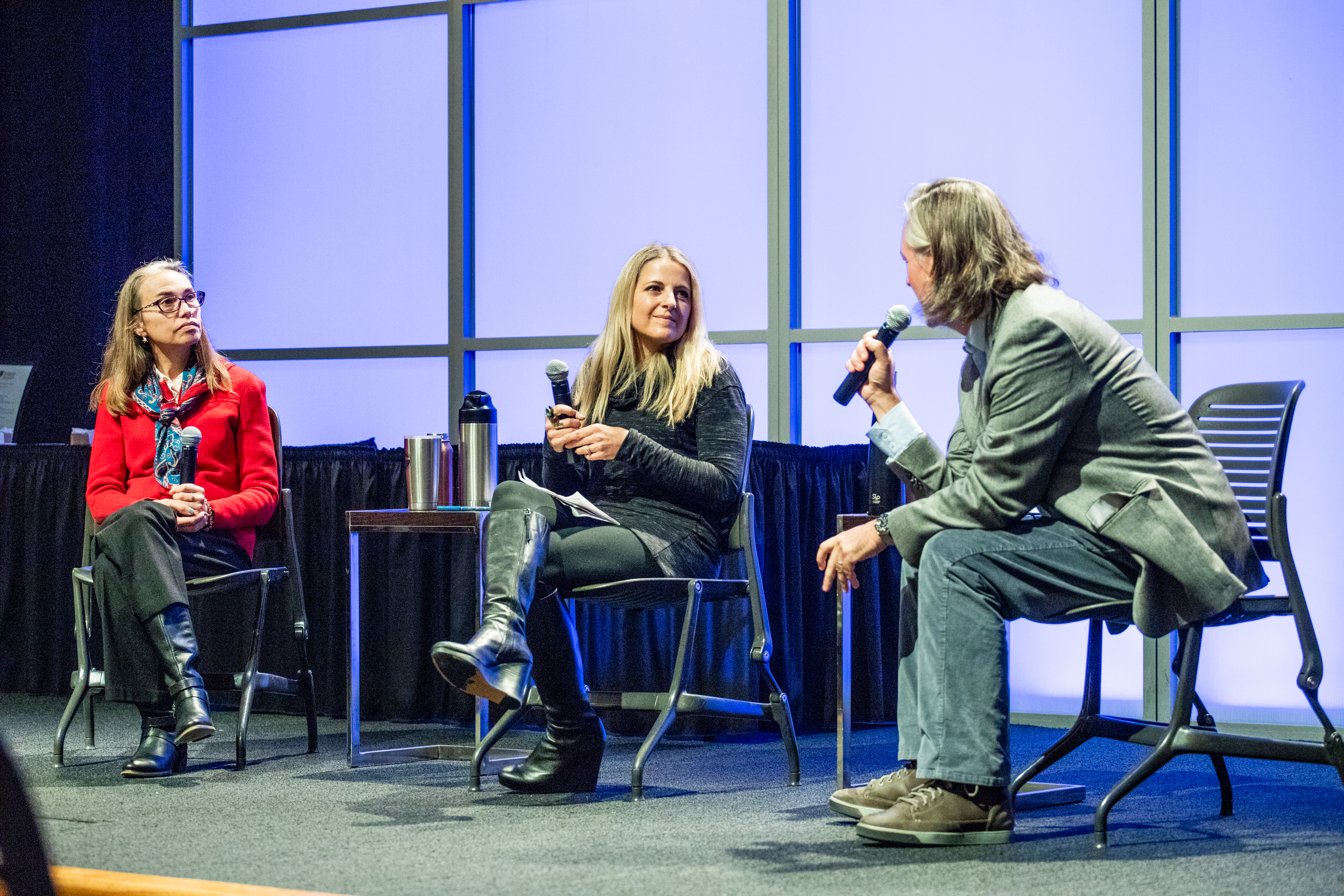
The first Georgia Humanities Symposium was held on Friday, March 8, 2019 in the Georgia Museum of Art on the UGA campus, in partnership with Georgia Humanities. The symposium’s three panel discussions included participants from state, regional, and national institutions including Georgia Tech, Morehouse College, the University of North Carolina, the National Humanities Alliance, the Consortium of Humanities Centers and Institutes, and the High Museum of Art. Videos of the panels are posted below.

The symposium was illustrative of a movement toward strengthening connections among humanities institutions nationally, and sharing strategies for involving local communities as partners in resource building and research.

Humanities Indicators, a project of the American Academy of Arts and Sciences, has recently published its National Inventory of Humanities Organizations, a database encompassing more than 45,000 “not-for-profit, for-profit, and government institutions engaged in humanities scholarship and/or in bringing humanities knowledge or skills to various audiences.” And the NHA’s Humanities for All website catalogs more than 1,400 publicly engaged humanities initiatives nationwide and more than 40 in Georgia, including several that were represented at the symposium.

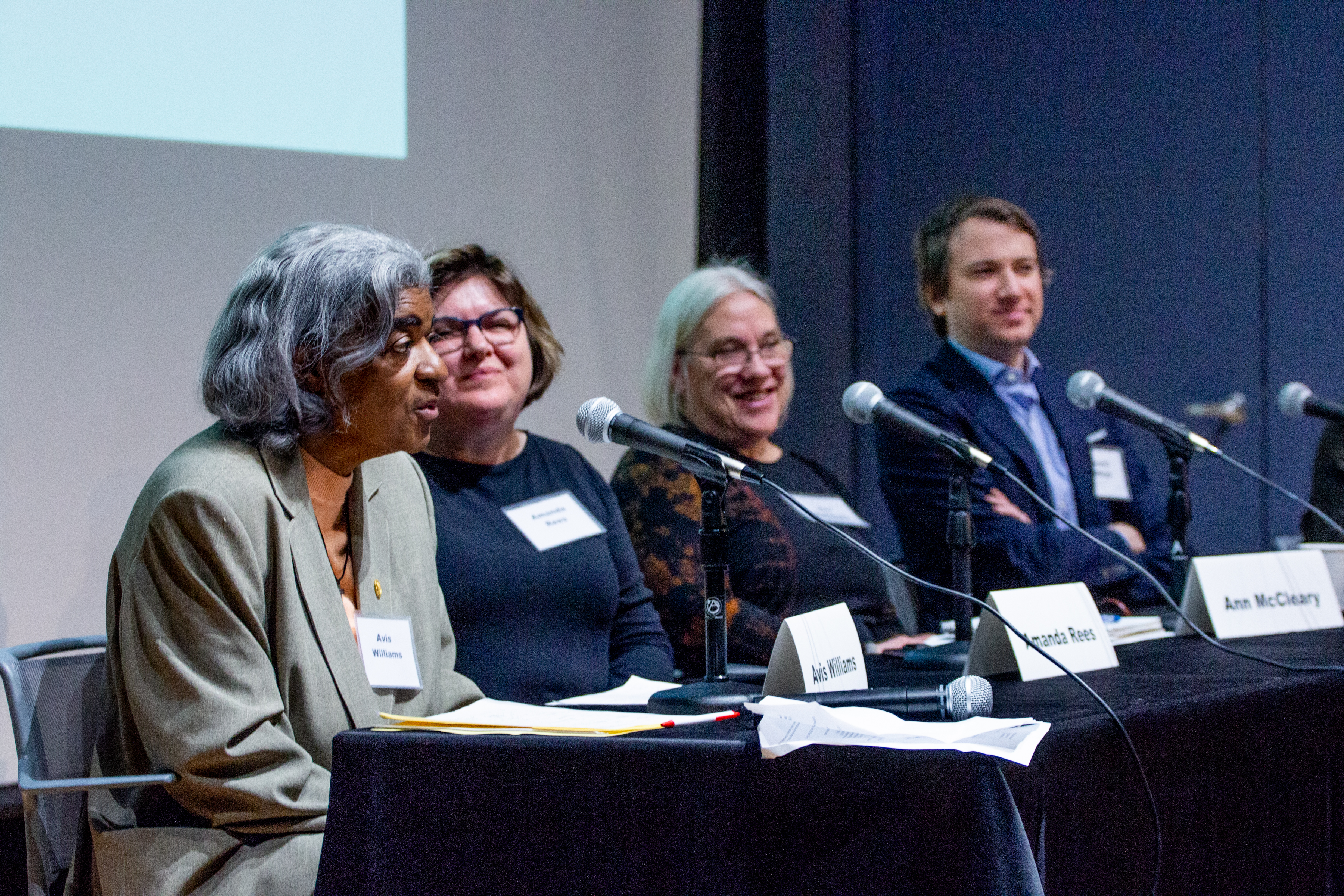
One of those is the Columbus Community Geography Center at Columbus State University, coordinated by Amanda Rees, who participated in the panel on “Georgia and the Public Humanities.”

Rees and student researchers in the center use academic resources and methods in collaboration with community members on projects such as a historical map to help develop a historic district nomination for a formerly segregated, post-World War II African American subdivision in Columbus. “When we can use our tools to help tell that story, that’s really pretty important,” she said during the panel. “To help people understand what they’re looking at, and not just see it in one way.”

Mark Wilson, director of Auburn University’s Caroline Marshall Draughon Center for the Arts and Humanities, was one of the more than 80 humanities research leaders who attended the symposium. “I was challenged to think about our community relationships and partnerships in a new way,” he said, “and I believe this gathering made a contribution to everyone who attended.”

“Every project that was shared in Athens expands the number and range of people who have experienced and benefitted from the humanities,” wrote Daniel Fisher, a project director at the National Humanities Alliance Foundation, in a blog post on the NHA’s website.

Vicki L. Crawford, director of the Martin Luther King, Jr. Collection and associate professor of African American Studies at Morehouse College, served as moderator on the symposium’s third panel on next steps for public humanities initiatives in Georgia. “As we face the challenges of our times, the humanities will continue to play a central role in American life and culture,” she said. “Our recent gathering was especially enriching and certain to generate new collaborations and partnerships among a diverse array of humanities educators and advocates throughout the state.”

The Willson Center is currently planning the 2020 Georgia Humanities Symposium, which will be held next spring.


Introductions

Nicholas Allen (Director, Willson Center) and Libby Morris (Interim Senior Vice President for Academic Affairs and Provost, UGA)

Panel One: Georgia and The Public Humanities

Chair: Stephen Berry (UGA)

Edward Hatfield (New Georgia Encyclopedia)

Ann McCleary (University of West Georgia, West Georgia Textile Heritage Trail)

Amanda Rees (Columbus State)

Avis Williams (Putnam County School System)


Panel Two: Making Connections

Chair: William Warner (CHCI)

Rand Suffolk (High Museum)

Jeanne Bohannon (Kennesaw University)

Robyn Schroeder (UNC)

Brian Orland (UGA)


Panel Three: Next Steps

Chair: Vicki Crawford (Morehouse)

Kelly Caudle (Georgia Humanities)

Jacqueline Jones Royster (Georgia Tech)

Barbara McCaskill (UGA)

Daniel Fisher (NHA)

Closing Remarks

Nicholas Allen (Director, Willson Center)


2019 Global Georgia Initiative continues with three events in April

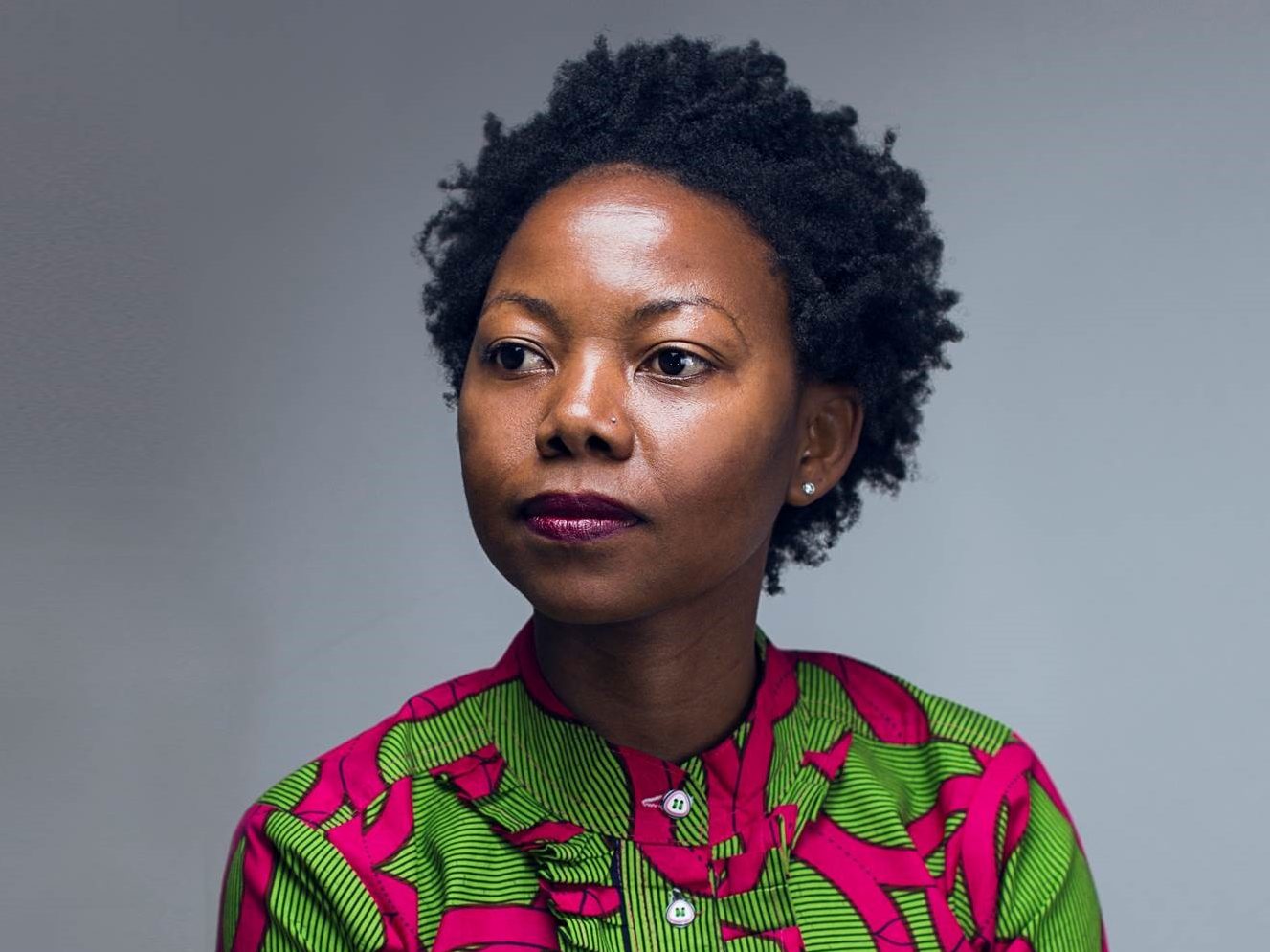
The Willson Center’s 2019 Global Georgia Initiative visiting speaker series began this February with public talks by author Jeff VanderMeer and historian and Ferdinand Phinizy Lecturer Stephanie McCurry. The series continues with a panel discussion on the removal of monuments in the global south featuring a presentation by South African photographer Christo Doherty on April 10, the Betty Jean Craige Annual Lecture in Comparative Literature by novelist NoViolet Bulawayo on April 15, and the Georgia Review Earth Day Lecture by the renowned environmental author Barry Lopez on April 22.

McCurry’s lecture can be viewed here.

Research magazine profiles partnership of Delta Chair Rebecca Rutstein and oceanographer Samantha Joye

The spring issue of Research magazine, published by the UGA Office of Research, includes an excellent article by Allyson Mann on 2018-2019 Delta Visiting Chair Rebecca Rutstein and her partnership with UGA oceanographer Samantha Joye. Read the magazine feature and stay tuned for video of Rutstein and Joye’s second Delta Chair conversation on the confluence of art and science, which took place March 28. Their first conversation, at November’s national conference of the Alliance for the Arts in Research Universities (a2ru), can be viewed here.

Video of Phinizy Lecture by historian Stephanie McCurry now online

Columbia University historian Stephanie McCurry visited the University of Georgia to give the department of history’s Ferdinand Phinizy Lecture, an event in the Willson Center’s Global Georgia Initiative. McCurry’s talk, which took place Feb. 22 in the Seney-Stovall Chapel, was also part of the university’s Signature Lectures series.

McCurry is the R. Gordon Hoxie Professor of American History in Honor of Dwight D. Eisenhower at Columbia. Her areas of research include the United States in the 19th century, the American South, the American Civil War, and the history of women and gender. She is the author of Masters of Small Worlds: Yeoman Households, Gender Relations, and the Political Culture of the Antebellum South Carolina Low Country (1995) and Confederate Reckoning: Power and Politics in the Civil War South, (2010), a finalist for the Pulitzer Prize for history.

Delta Visiting Chair Rebecca Rutstein returns for Mar. 28 conversation with oceanographer Samantha Joye

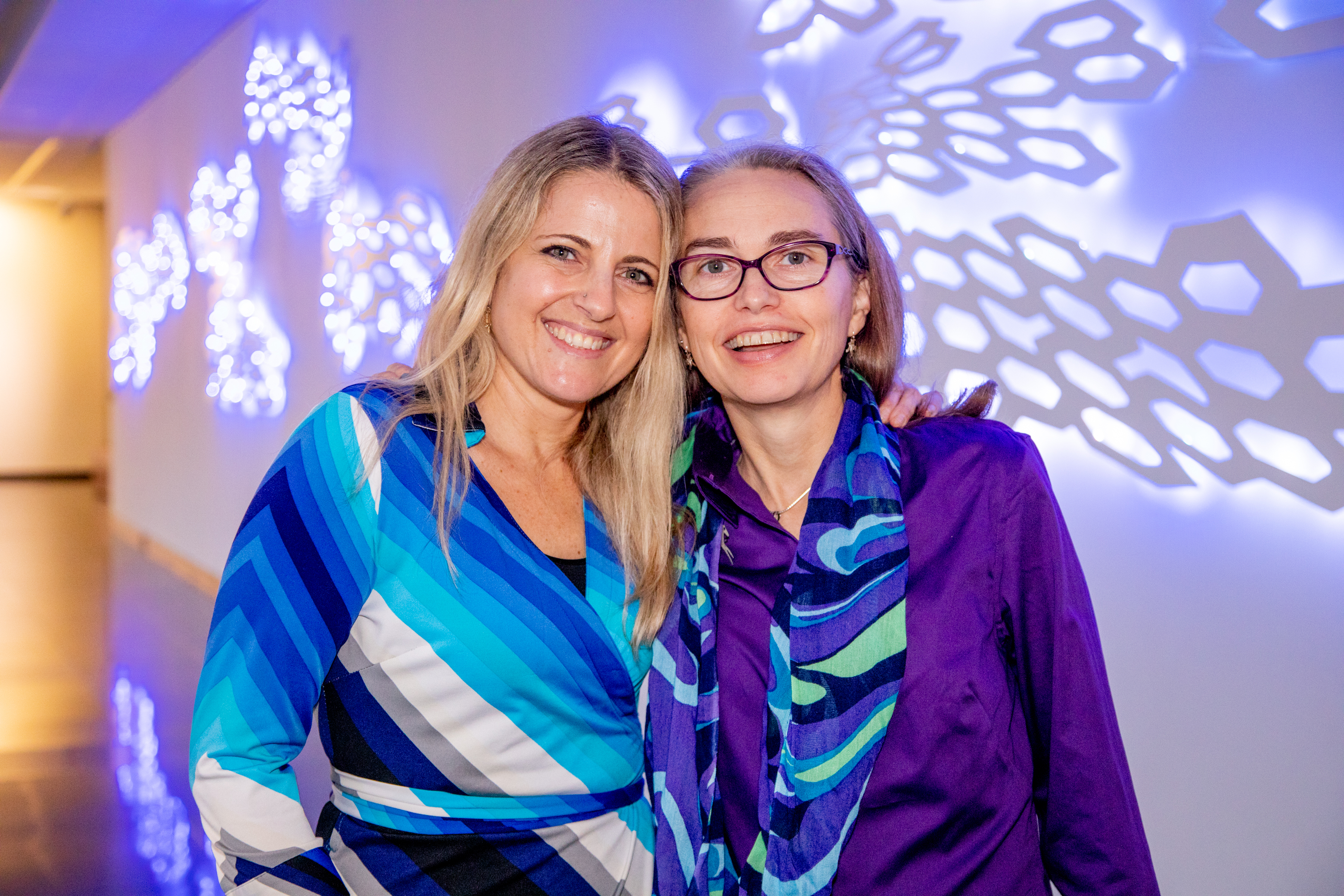
Rebecca Rutstein, an artist whose work spans painting, sculpture, installation and public art, exploring abstraction inspired by science, data and maps, is UGA’s 2018-2019 Delta Visiting Chair for Global Understanding. She returns to UGA and Athens for her second visit of the academic year March 27-28 for events including a public conversation at 7 p.m. Thursday, March 28, with a reception beginning at 6 p.m.

Rutstein’s return visit follows her keynote discussion at November’s national conference of the Alliance for the Arts in Research Universities (a2ru). Rutstein will again give a public presentation with oceanographer Samantha Joye, Athletic Association Professor in Arts and Sciences in the marine sciences department of UGA’s Franklin College of Arts and Sciences.

The conversation, titled “Expeditions, Experiments and the Ocean: Adventures and Discoveries,” will be held in the M. Smith Griffith Auditorium of the Georgia Museum of Art. It will be moderated by Nicholas Allen, Franklin Professor of English and director of the Willson Center.

In addition to her conversation with Joye and Allen, Rutstein will give a talk at Creature Comforts Brewing Co. in downtown Athens at 4 p.m. Wednesday, March 27 as part of Creature Comforts’ Get Artistic initiative. Please RSVP for the talk if you plan to attend.

The Delta Visiting Chair, established by the Willson Center through the support of The Delta Air Lines Foundation, hosts outstanding global scholars, leading creative thinkers, artists and intellectuals who participate in public events at UGA and in the Athens community.

Since Rutstein’s November visit, she and Joye have completed an expedition to Mexico’s Guaymas Basin in the Sea of Cortez that included a deep-sea dive aboard Alvin, a submersible vessel able to withstand the crushing pressure of the extremes of the deep ocean. While scientists explored hydrothermal vents and carbon cycling processes in the basin, Rutstein set up her studio on the ship and created new works inspired by the data collected in real time.

Athens-Clarke County public middle school students will visit the Georgia Museum of Art for a presentation and Q&A with Rutstein during her visit. Eight new paintings by Rutstein inspired by the expedition are now on display at the museum. Rutstein’s 64-foot-long interactive sculptural installation and a monumental four-part painting remain installed at the museum as well, and a mural-sized banner is on display at the Lamar Dodd School of Art.

In the process of creating works inspired by geology, microbiology and marine science, Rutstein has previously collaborated with scientists aboard research vessels sailing from the Galapagos Islands to California, Vietnam to Guam, and in the waters surrounding Tahiti. Prior to her expedition with Joye, she made her first descent in Alvin to the ocean floor off the Pacific Coast of Costa Rica with a team of scientists from Temple University in October 2018.

Rutstein has exhibited in museums, institutions and galleries, and has received numerous awards including the prestigious Pew Fellowship in the Arts. 

Joye’s research examines the complex feedback that drive elemental cycling in coastal and open ocean environments, and the effects of climate change and anthropogenic disturbances on critical environmental processes to gain a better understanding of how changes will affect ecosystem functioning.

Call for proposals: Whiting Public Engagement Fellowships and Seed Grants 2020-2021

Faculty who are interested in being nominated for the Whiting Public Engagement Fellowship or Seed Grant may submit proposals to the Willson Center by March 29.

The Whiting Public Engagement Fellowship and Seed Grant programs are intended to celebrate and empower early-career faculty who embrace public engagement as part of the scholarly vocation. Both programs support ambitious projects infusing into public life the richness, profundity, and nuance that give the humanities their lasting value. The stage of a project will determine the relevant program.

The Public Engagement Fellowship ($50,000) is for projects far enough into development or xecution to present specific, compelling evidence that they will successfully engage the intended public. For the strongest Fellowship proposals, both the overall strategy and the practical plan to implement the project will be deeply developed, relationships with key collaborators will be in place, and connections with the intended public will have been cultivated.

The Public Engagement Seed Grant (up to $10,000) supports projects at a somewhat earlier stage of development than the Fellowship, before the nominee has been able to establish a specific track record of success for the proposed public-facing work. It is not, however, designed for projects starting entirely from scratch: nominees should have fleshed out a compelling vision, including a clear sense of whose collaboration will be required and the ultimate scope and outcomes.

Nomination and Guidelines: Partner schools are invited to nominate one humanities faculty for each of the two programs. See the guidelines for further details about both programs.

Eligibility: To be eligible for either program, nominees must be full-time humanities faculty at an accredited US institution of higher learning as of September 2019; they must be early-career, defined as pre-tenure, untenured, or have received tenure in the last five years. Full-time adjunct faculty at an equivalent career stage are eligible.

Submission and deadline: Interested faculty who meet the conditions above should submit a proposal (1-2 pages) that briefly addresses:

  • Project overview:
    • Identify the program (Fellowship or Seed Grant) relevant to your proposal and provide a summary of your public-facing project.
  • Logistics:
    • Speak to the complexities of public-facing work including realistic assessments of time and effort required of different participants.
  • Public engagement:
    • Address how the project will reach the public and encourage participation
  • Collaborators:
    • Describe others who will participate in your public facing project (teachers, community leaders, designers, museums and historical sites, technologists, nonprofit organizations, curators, scholars in other disciplines, filmmakers, etc.).
  • Context and landscape:
    • Address the context of your project in terms of how much the public is likely to know about your topic and where within that topic its interests likely lie, and how that affects your starting point.
  • Skills required:
    • Specify the technical skills required for success and indicate how you either have mastered them or will collaborate with someone who has.

Faculty should submit their proposal and CV to Dr. Lloyd Winstead, Senior Associate Director at the Willson Center, at winstead@uga.edu by March 29. Faculty will be notified regarding selection in April.

Remembering Christy Desmet

Christy Desmet, a beloved and highly accomplished member of the UGA department of English faculty for more than three decades, passed away on July 25. The following tribute was written by her dear friend, longtime collaborator, and fellow professor of English, Sujata Iyengar.